
A patient leaving the CHU de Martinique for Paris travels on Air France. The same patient, going home to a city not served by Air France, needs a different solution for the second leg. That is when WIA calls on a certified air ambulance operator. The aircraft lands where scheduled commercial services cannot.
The air ambulance is not WIA’s default response to a serious case. It is the right tool when the destination or route makes a commercial solution impossible. This page explains when that applies and what the coordination process looks like from first call to handover.
What Are Air Ambulance Medical Flight Services?
An air ambulance is a dedicated medical aircraft operated by a certified crew of medical professionals: a flight doctor, a flight nurse and, where clinically required, a specialist in critical care air transport. The aircraft carries medical equipment configured to the patient’s needs: ventilator, cardiac monitor, defibrillator, infusion pumps, oxygen supply and emergency medication. The entire aircraft is committed to one patient.
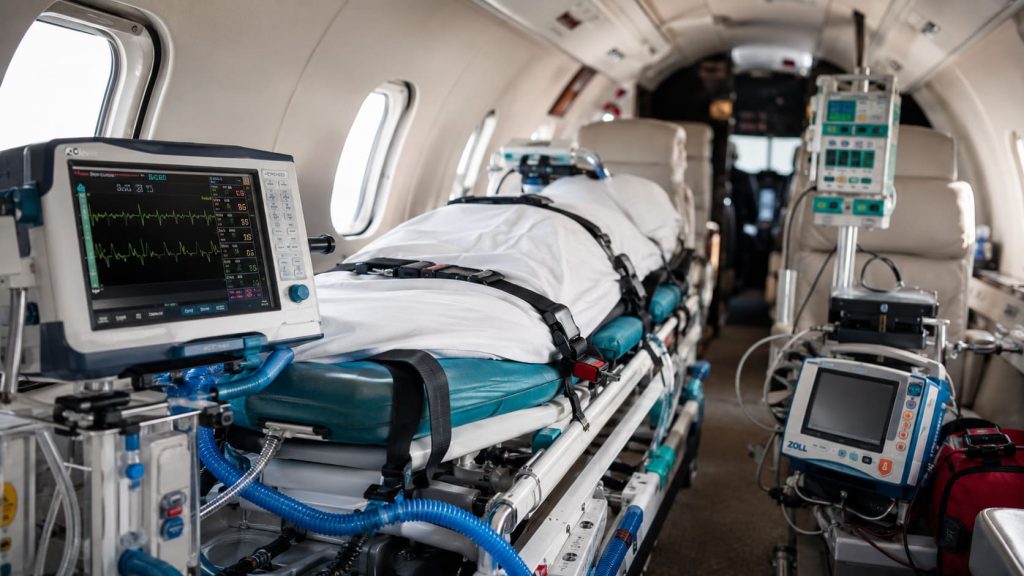
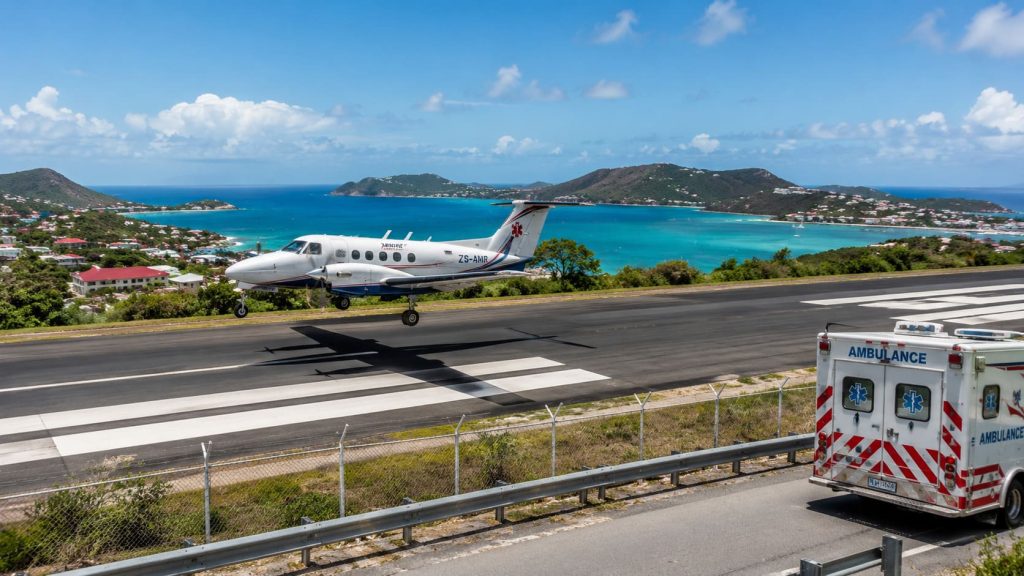
WIA works with certified air ambulance operators selected by aircraft type, medical equipment, crew qualifications and range. The operator suited for a Caribbean-to-Europe transfer differs from the one used for an urgent intra-Caribbean mission.
Air Ambulance Transport: When the Destination Requires a Dedicated Aircraft
WIA evaluates a commercial solution first for every case. The commercial stretcher is WIA’s core expertise and can carry patients of all severity levels, including intubated and ventilated patients, as long as the destination is served by Air France or an equivalent carrier. Air ambulance services enter the picture when that condition is not met.
Air Ambulance Services: Route Accessibility as the Primary Factor
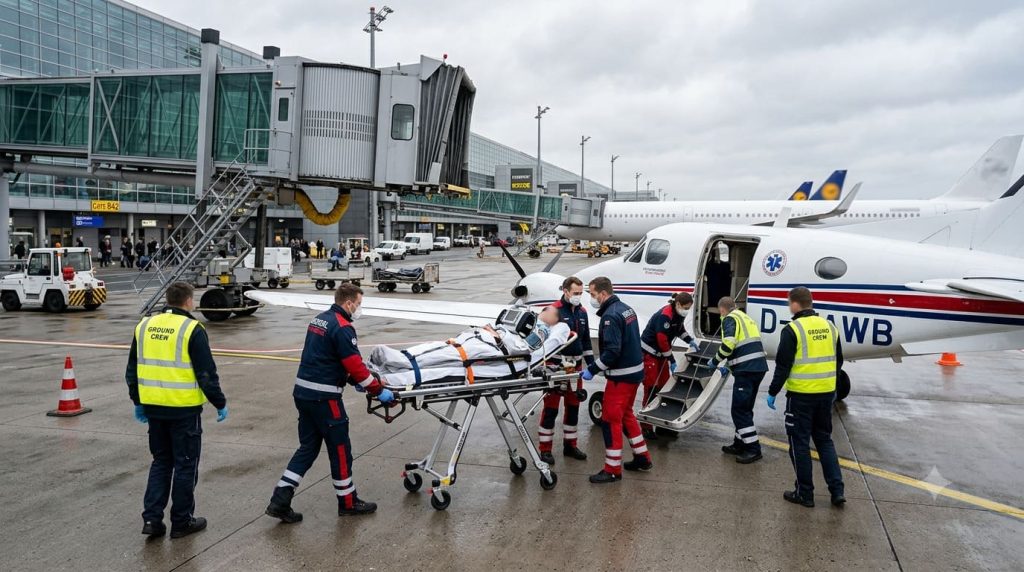
A patient going home to a destination near a small regional airport has a practical problem: no commercial air stretcher is available on that route. An air ambulance reaches airports that scheduled airlines cannot. WIA also uses air ambulance partners for wing-to-wing emergency transport: when a patient arrives at Paris Charles de Gaulle on a repatriation flight from Martinique and needs a dedicated second leg to a smaller airport, a certified operator handles that transfer.
Intra-Caribbean Air Ambulance Medical Flights
Not all missions are intercontinental. Within the Caribbean basin, WIA coordinates urgent transfers between islands when no adequate commercial route exists. A patient in Saint-Martin or Barbados requiring specialist care at the CHU de Martinique cannot always wait for the next scheduled inter-island flight. Air ambulance services cover that transfer directly, landing at smaller island airports. Someone meets the patient at every step: the care does not stop at the airport.
Clinical Factors: Medical Equipment and Intensive Care on Board
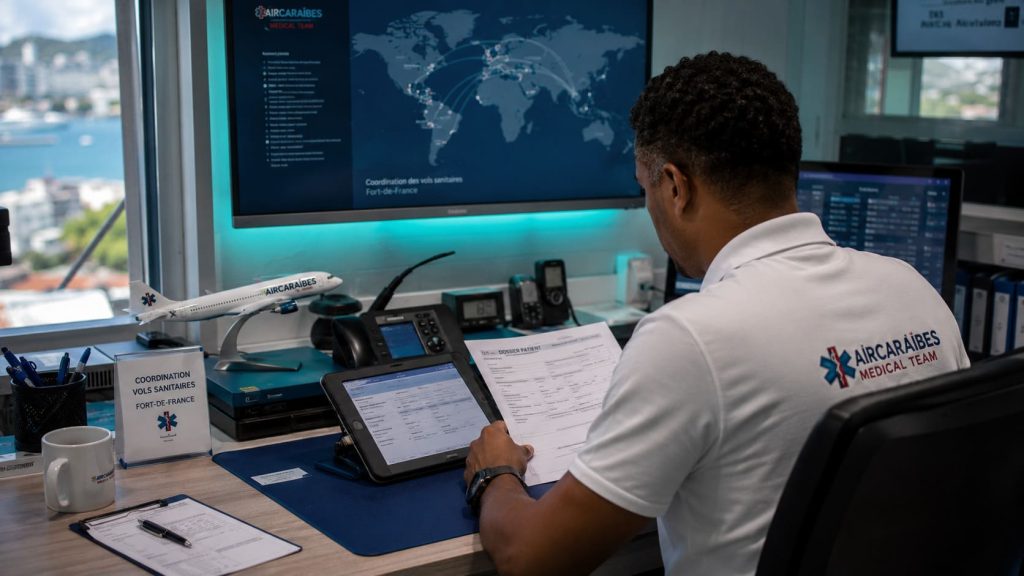
Once the route justifies a dedicated aircraft, the clinical picture determines configuration. WIA’s flight coordinator goes through the patient’s file with the attending physician at the CHU de Martinique or CHU de Guadeloupe and tells the operator exactly what equipment and crew the flight needs before any booking is made. A patient requiring intensive care and continuous ventilation needs a different setup from one who is stable but cannot sit upright.
Air France supplies medical-grade oxygen on board its commercial flights. For many patients, a commercial service with an experienced nurse or doctor provides the same level of care as a dedicated aircraft. The air ambulance gets the patient further when the route demands it. It is not a better medical environment by default.
Air Ambulance vs. Commercial Medical Flight Services: Decision Guide
When WIA recommends a dedicated aircraft versus a commercial medical escort service.| Use an air ambulance when… | A commercial solution is evaluated first when… |
|---|---|
| The final destination is near a small regional airport not served by Air France or equivalent commercial carriers | The destination is served by a major international airport via Air France or an equivalent carrier |
| A wing-to-wing transfer is required: the patient arrives by commercial flight but needs a dedicated second leg to a smaller airport | The patient can travel lying flat on a commercial air stretcher configuration on a scheduled service |
| No commercial departure is available within an acceptable timeframe given the patient’s clinical condition | The patient is fit to fly and can travel seated with a medical escort on board |
| The patient requires continuous active clinical intervention throughout the flight that cannot be managed by a nurse escort alone | Schedule and route complexity can be managed within the commercial network |
How WIA Coordinates Air Ambulance Medical Transport Services
From First Call to Medical Handover: Emergency Transport Coordination
WIA’s flight coordinator, medical team and ground logistics work in parallel from the moment a case is opened. Medical evacuation services and air ambulance missions follow the same structured process
| Step | Stage | What Happens |
|---|---|---|
| 1 | First call | WIA’s coordination team receives the case from the insurance company or hospital. A medical coordinator is assigned immediately. |
| 2 | Medical assessment | The coordinator reviews the patient’s clinical file in contact with the attending physician at the CHU de Martinique or CHU de Guadeloupe or any other receiving structure in another island. Destination, route options and clinical requirements are assessed simultaneously. |
| 3 | Operator selection | WIA selects a certified air ambulance operator from its partner network based on aircraft type, medical equipment on board and availability. The aircraft is configured to the patient’s specific clinical needs before departure. |
| 4 | Ground coordination | A road ambulance transfers the patient from the hospital to the departure airport. At the destination, ground transportation is arranged to the receiving medical facility or patient’s home. |
| 5 | Flight and handover | The medical team on board provides continuous monitoring throughout the flight. WIA’s coordination centre remains in contact with the aircraft and the receiving facility throughout. A full handover report is provided on arrival. |
Insurance Company Coordination and Medical Transport Documentation
In most cases, the patient’s insurance company contacts WIA to open the mission. WIA works directly with insurance companies on pre-authorisation, cost documentation and real-time updates. When a patient is not covered, WIA accepts direct mandates from patients and families with transparent pricing before any commitment.
Air Ambulance Repatriation Services for Insurers and Medical Teams
Why Insurers Trust WIA for Critical Care Air Ambulance Coordination
More than 150 international insurers rely on WIA, including most French assistances, such as Europ Assistance, AXA Assistance, Allianz Global Assistance, Inter Mutuelles Assistance, Mutuaide, Fidelia and FILA. WIA always looks at commercial options before proposing a dedicated aircraft. An air ambulance mission is recommended only when the route or schedule makes it the right call. Insurers know that WIA will not reach for the most expensive solution when a cheaper one does the job.
Hospital Referrals and Medical Flight Services from CHU de Martinique
The CHU de Martinique in Fort-de-France, the reference hospital for the French Caribbean operating to European university hospital standards, coordinates directly with WIA on complex transfers. The CHU de Guadeloupe in Pointe-à-Pitre does the same. When a patient’s destination or condition rules out a commercial flight, the hospital’s medical professionals call WIA and the work starts from that conversation.
→ Speak to a WIA coordinator 24/7
Frequently Asked Questions: Air Ambulance Medical Transport
When does WIA recommend an air ambulance instead of a commercial stretcher?
The primary factor is destination. If the patient’s home is near a small regional airport not served by commercial airlines, a commercial stretcher is not an option. Air ambulance services reach airports that scheduled flights do not. WIA also coordinates air ambulance medical evacuation services for wing-to-wing transfers when a patient needs a dedicated second leg after a commercial inbound flight
Does an air ambulance only carry critically ill patients?
No. The decision is based on the destination and route, not clinical severity alone. A patient with serious medical needs whose home is near Frankfurt travels by commercial stretcher on Air France. A stable patient going home near a small regional airport needs a dedicated aircraft. Clinical condition determines the medical equipment and crew on board, not the transport mode.
What medical equipment is on board a WIA-coordinated air ambulance?
The aircraft is configured to the patient’s clinical requirements before departure. Standard equipment for critical care air ambulance missions includes a ventilator, cardiac monitor, defibrillator, infusion pumps, oxygen supply and emergency medication. The flight coordinator briefs the medical team on the patient’s file before take-off.
How quickly can WIA mobilise an air ambulance from Martinique or Guadeloupe?
For urgent cases, WIA can mobilise a certified operator within a few hours of the first call. The medical assessment and operator selection happen simultaneously. WIA’s coordination team responds to new cases within minutes, 24 hours a day.
Who pays for an air ambulance repatriation?
In most cases, the patient’s insurance company covers the cost. WIA works directly with insurance companies on pre-authorisation and documentation. When a patient is not covered, WIA accepts direct mandates and provides transparent pricing before any commitment is made.
Can family members travel on the air ambulance with the patient?
In some cases, yes, depending on aircraft type and medical equipment on board. WIA’s team advises on this during planning. When space does not allow it, WIA can book a commercial flight for the family member on the same route, departing at the same time.
Need Air Ambulance Services from Martinique or the Caribbean?

WIA’s coordination team is available 24 hours a day, every day of the year. Whether you are an insurance company opening a case or a family trying to bring someone home, the first call is free and the assessment is immediate.
→ Request an air ambulance assessment — 24/7
→ Compare all medical transport services
→ How WIA coordinates medical repatriation from first call to arrival
