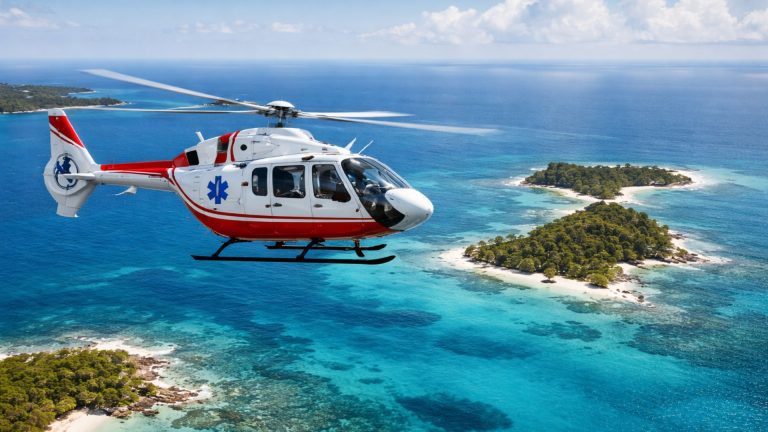
When a patient can’t sit up—let alone board a commercial flight—every detail of their transport becomes a logistical and medical challenge. For insurers managing cases in the Caribbean, coordinating bedbound patient repatriation requires more than just a plane; it demands specialized equipment, multilingual coordination, and deep regional expertise.
This article breaks down:
- What defines a bedbound patient (and the conditions that necessitate specialized transport).
- The unique challenges of moving immobile patients across islands or internationally.
- How medical flights are configured for bedbound cases—from stretcher setups to ICU-level care.
- Cost considerations and insurance coverage nuances.
What Is a Bedbound Patient?
A bedbound patient cannot sit, stand, or ambulate without assistance due to:
- Neurological conditions: Advanced ALS, spinal cord injuries, or post-stroke paralysis.
- Trauma: Severe fractures, burns, or surgical recovery.
- Chronic illnesses: Late-stage COPD, organ failure, or degenerative diseases.
These patients require continuous horizontal positioning during transport, ruling out commercial airline seats. Even slight elevation can compromise breathing, circulation, or spinal stability.
Challenges of Transporting Bedbound Patients
1. Medical Risks
- Transporting bedbound patients introduces significant medical vulnerabilities that require proactive management. Prolonged immobility during transit can quickly lead to pressure sores, even with short flights. To mitigate this, specialized stretchers with medical-grade padding and rotation protocols are essential to redistribute pressure and maintain skin integrity.
- Respiratory risks are equally critical; altitude changes during flight can compromise oxygen saturation, particularly for patients with pre-existing conditions like COPD or pneumonia. Ventilators or supplemental oxygen systems may be necessary to stabilize breathing mid-flight.
- Pain management is another priority, as even minor movements—such as transferring a patient from a ground ambulance to the aircraft—can exacerbate discomfort or injury. Care teams must plan every transition meticulously, using orthopedic lifts and spinal boards when needed to minimize jostling and ensure patient safety.
2. Equipment & Logistics
- The physical logistics of moving a bedbound patient demand tailored solutions at every stage. On commercial flights, this often means removing rows of seats to accommodate a stretcher, along with installing privacy curtains, portable oxygen tanks, and monitoring equipment.
- For critical cases, fixed-wing air ambulances are configured as flying ICUs, equipped with ventilators, suction units, and cardiac monitors to handle emergencies mid-flight.
- However, the Caribbean’s infrastructure adds layers of complexity: small island airports may lack jet bridges or advanced medical facilities, requiring ground ambulances with stretcher-loading capabilities to meet planes on the tarmac. Limited local resources—such as scarce ICU ambulances or uneven road conditions—can further delay transfers, making end-to-end coordination with regional partners a necessity.
3. Legal & Bureaucratic Hurdles
- Beyond medical and logistical challenges, bedbound patient transfers face jurisdictional and administrative obstacles. Inter-island permits vary widely across the Caribbean, with some nations requiring advance health clearances or quarantines for certain conditions.
- Customs declarations become a high-stakes process when transporting controlled medications (e.g., opioids for pain relief) or specialized medical devices, as incomplete paperwork can ground a flight.
- Even with approvals secured, hospital acceptance at the destination isn’t guaranteed; bed availability must be confirmed in advance, particularly for specialized units like stroke or spinal injury wards. Delays in any of these steps can escalate costs or worsen patient outcomes, underscoring the need for local expertise to navigate bureaucratic systems efficiently.

Solutions: How Bedbound Repatriation Works
1. Air Ambulances (Full ICU Setup)
- For bedbound patients in critical condition—such as those requiring intubation, vasopressors, or ECMO—a dedicated air ambulance provides the highest level of in-flight care.
- These aircraft are essentially flying intensive care units, equipped with specialized stretcher systems that accommodate neonatal, pediatric, and adult patients while maintaining full ICU functionality. Advanced life support equipment, including ventilators, infusion pumps, and cardiac monitors, ensures continuous treatment during transport. Medical teams typically consist of intensive care physicians, critical care nurses, and respiratory therapists trained to handle emergencies at altitude.
- West Indies Assistance (WIA) plays a pivotal role in these high-stakes transfers, managing 24/7 flight coordination to secure the most efficient routes, obtain necessary overflight and landing permits, and arrange ground ambulances at both departure and arrival points. Given the Caribbean’s fragmented infrastructure, WIA’s regional expertise ensures that even complex logistics—such as coordinating with small island airports lacking advanced medical facilities—are handled seamlessly.
2. Commercial Stretcher Flights
- For stable but immobile patients—such as those recovering from major surgery or non-critical injuries—commercial stretcher flights offer a cost-effective alternative to full air ambulance services.
- In these cases, airlines can modify their cabins by removing business-class seats to install a stretcher, complete with privacy screens, supplemental oxygen, and basic monitoring equipment. A trained medical escort (typically a nurse or paramedic) accompanies the patient to monitor vital signs and administer medications during the flight.
- While not suitable for ICU-level care, this option provides a safe solution for patients who do not require intensive interventions—at a fraction of the cost (up to 60% cheaper than chartering an air ambulance). WIA facilitates these arrangements by liaising with airlines to secure stretcher approvals, ensuring medical documentation meets airline requirements, and coordinating ground transfers to and from the airport. This option is particularly valuable for insurers seeking to balance cost containment with patient safety.
3. Ground & Maritime Transfers
- In cases where air transport is impractical—such as short-distance transfers between Caribbean islands with limited airstrip access—ground and maritime solutions fill the gap. For patients who cannot tolerate air travel or require movement between neighboring islands without direct flights, medically equipped ferries or private marine ambulances may be utilized. These vessels are configured with stretcher-securing systems, basic medical equipment, and trained personnel to ensure stability during transit.
- For land-based transfers, WIA leverages its network of ground ambulance partners across the Caribbean, ensuring vehicles are equipped with specialized stretchers, suspension systems to minimize vibration, and, when necessary, mobile ICU capabilities. Given the region’s variable road conditions and infrastructure limitations, WIA’s logistical expertise ensures that ground transfers are timed to align with ferry or flight schedules, minimizing delays and maintaining continuity of care.

Case Study: Stroke Repatriation from Martinique to Paris
Scenario: A 68-year-old tourist suffers a severe stroke in Martinique. Local hospitals stabilize her, but she requires neurorehabilitation in France. She’s bedbound and unable to sit.
WIA’s Action:
- Medical team assesses stability for flight.
- Arranges a fixed-wing air ambulance with a neurologist and ICU nurse.
- Coordinates French customs clearance and Paris hospital admission.
- Ground ambulances meet the aircraft at both ends.
Result: Patient transported within 48 hours, with insurers covering 80% of costs under her travel policy.
Costs & Insurance Coverage
- Air ambulance (Caribbean to Europe/US): $35,000–$100,000+.
- Commercial stretcher flight: $12,000–$25,000.
- Ground/ferry transfers: $2,000–$8,000 (inter-island).
Insurer Considerations:
- Medical necessity: Does the policy cover “repatriation” or only “emergency evacuation”?
- Pre-authorization: WIA liaises with insurers to fast-track approvals.
- Cost containment: Stretcher flights vs. charters—WIA advises on the safest, most economical option.
Why Choose West Indies Assistance?
- Caribbean Expertise: Knowledge of island-specific protocols (e.g., Jamaica vs. St. Lucia).
- Multilingual Teams: French, English, Spanish, and Creole support.
- End-to-End Coordination: From hospital paperwork to bedside handovers.
Need a Quote for Bedbound Repatriation?
Contact WIA’s 24/7 team for insurer-tailored solutions:
📞 +596 596 70 18 89