The dream Caribbean vacation or crucial business trip can turn into a nightmare in an instant. A sudden illness, a serious accident, or a chronic condition flaring up far from home is stressful enough. Then comes the daunting realization: you can’t fly home on a commercial airline.
This moment of vulnerability is where expert guidance becomes critical. For insurers, medical coordinators, and patients in the Caribbean, understanding why commercial flight is often not an option—and knowing the safe, efficient alternatives—is paramount.
This article explores:
- The primary medical conditions that prevent commercial flight.
- The hidden risks of flying commercially while unwell.
- The specialized transport solutions available.
- How regional expertise in the Caribbean ensures a seamless, safe repatriation.
Why Commercial Airlines Restrict Medically Vulnerable Passengers
Commercial airlines are designed for efficiency and safety for the general public, not for managing complex medical emergencies at 30,000 feet. Their restrictions are not arbitrary; they are based on very real physiological and logistical realities.

1. The Cabin Environment: An Inhospitable Place for the Unwell
An aircraft cabin is a challenging environment even for the healthy. For those recovering from illness or injury, it can be dangerous.
- Reduced Oxygen Levels (Cabin Altitude): Cabins are pressurized to an equivalent of 6,000-8,000 feet above sea level. This significantly reduces oxygen saturation in the blood, a serious risk for patients with:
- Cardiac conditions (heart failure, recent heart attack, uncontrolled angina)
- Respiratory illnesses (COPD, severe asthma, pneumonia, pulmonary embolism)
- Severe anemia or blood clots
- Low Humidity & Pressurization: Extremely dry air can lead to dehydration and complicate conditions like deep vein thrombosis (DVT), making it riskier for post-operative patients.
- Confined Space & Stress: The noise, vibration, and inability to move or lie flat can exacerbate pain, anxiety, and confusion, especially for elderly patients or those with neurological conditions.
2. Conditions That Typically Ground Commercial Passengers
Airlines and their medical departments have clear guidelines. Common reasons for being denied boarding include:
- Infectious Diseases: Contagious conditions (like tuberculosis or measles) that pose a risk to other passengers.
- Recent Surgery: Especially abdominal, brain, eye, or orthopedic surgery due to pressure changes and DVT risk.
- Unstable Chronic Conditions: Poorly controlled diabetes, epilepsy, or cardiovascular disease.
- Cognitive or Behavioral Issues: Severe dementia or confusion that could disrupt the flight or endanger the patient.
- Need for Supplemental Oxygen or Medical Equipment: Most airlines have strict limits on the type and number of oxygen cylinders allowed, if they permit them at all.
“If You Can’t Fly”: The Safe and Managed Alternatives
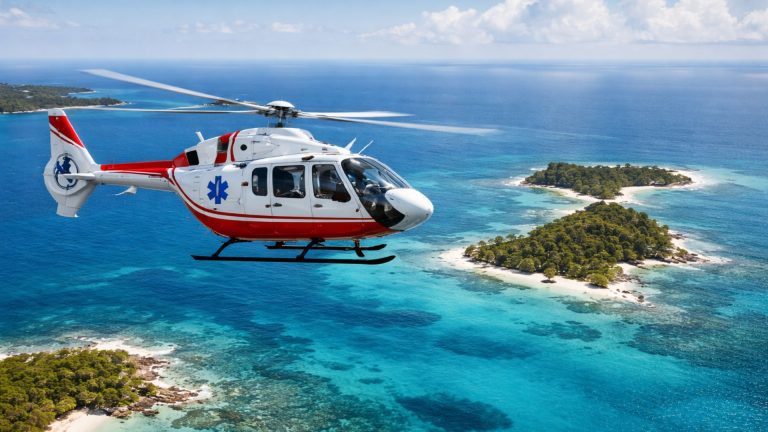
When a commercial flight is off the table, specialized medical transport services become the only safe solution. The right option isn’t always a full air ambulance; it’s about matching the patient’s medical needs with the most efficient and clinically appropriate pathway. At West Indies Assistance, our expertise lies in designing and executing these complex journeys across the Caribbean archipelago and beyond.
1. Mastering ICU-Level Care in the Air
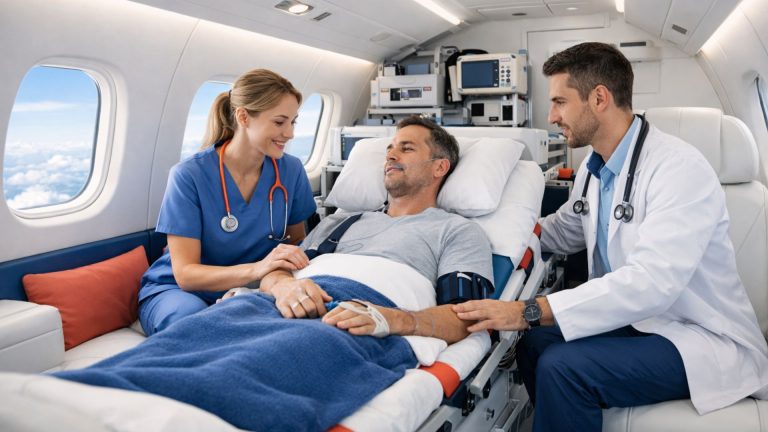
A common misconception is that intensive care monitoring is only possible inside a dedicated air ambulance. This is not the case. Our teams are experts in delivering high-acuity medical care onboard commercial flights, transforming a section of the cabin into a temporary clinical space.
- Our Capability in Action: We can provide continuous ICU-level monitoring (cardiac, oxygen saturation, blood pressure) and interventions during commercial flights. A critical part of this is managing the patient’s oxygen therapy, seamlessly connecting our portable, FAA-compliant equipment to the aircraft’s power supply to ensure an uninterrupted flow throughout the journey.
- The Medical Team: Whether on a private jet or an Air France flight to Paris, a specialized team—typically an intensive care doctor and a critical care nurse—accompanies the patient, providing care from bedside to bedside.
2. Navigating the Caribbean’s Logistical Reality
The primary logistical barrier in our region isn’t always the long-haul flight—it’s the first leg between islands. Most inter-island commercial aircraft are small and simply not equipped to accommodate a stretcher, making them a non-option for non-ambulatory patients.
- The WIA Solution: This is where our regional orchestration is critical. We design a seamless, bed-to-bed transfer by bridging this gap. For a patient in Barbados needing to reach a specialist in Paris, we would:
- Organize a dedicated air ambulance from Barbados (BGI) to Martinique (FDF) or Guadeloupe (PTP), staffed with our medical team.
- Coordinate a smooth transfer to a waiting commercial flight (e.g., Air France), where our team continues the ICU-level care all the way to Paris (CDG).
- This integrated approach ensures the patient never faces a gap in medical supervision and avoids the impossible task of finding a direct commercial stretcher flight between Caribbean islands.

The Caribbean Challenge: Why Local Expertise is Non-Negotiable
Arranging a medical flight from Europe or North America is complex. Arranging one from within the Caribbean adds layers of unique difficulty that only regional experts can navigate efficiently.
- Archipelagic Logistics: Coordinating between islands with different jurisdictions, customs, and health authorities.
- Airport Limitations: Many smaller island airports cannot accommodate large air ambulance jets, requiring careful aircraft selection and potential ground ambulance transfers.
- Multilingual Coordination: Ensuring seamless communication between English, French, Spanish, and Dutch-speaking medical facilities and officials.
- Local Hospital Knowledge: Knowing which facilities on which islands can provide specific care or stabilize a patient before transport.
West Indies Assistance: Your Expert Partner When You Can’t Fly
For over 20 years, West Indies Assistance has been the leading authority on medical repatriation within the Caribbean. We don’t just provide transportation; we provide end-to-end solutions that address every barrier.
Our process ensures safety and peace of mind:
- Immediate Medical Assessment: Our 24/7 coordination center connects with the treating physicians to evaluate the patient’s condition.
- Tailored Transport Recommendation: We determine the safest, most appropriate method: air ambulance, commercial stretcher, or medical escort.
- Seamless Logistics Management: We handle all the complexities—aircraft sourcing, medical team deployment, flight permits, customs clearance, and ground ambulances—so you don’t have to.
- Bed-to-Bed Transfer: We guarantee a smooth transition from the hospital bed abroad to the hospital bed at home.
Facing a “Can’t Fly” Scenario?
Don’t navigate this crisis alone. Whether you’re an insurer managing a claim or a family seeking help, our expertise turns a complex, stressful situation into a managed, safe process.
Contact West Indies Assistance Today for a Secure Repatriation Plan:
📞 +596 596 70 18 89
🌐 https://westindies-assistance.com/en/
✉️ contact@westindies-assistance.com