Imagine being thousands of miles from home when a health crisis strikes. The local clinic stabilizes your condition—but the right care, the specialists, and your support network are in another country. In that moment, you don’t need a standard flight or a basic ambulance.
You need an air ambulance.
Whether you’re an insurance professional coordinating urgent evacuations, a traveler seeking help abroad, or a healthcare coordinator arranging cross-border care, understanding how air ambulance services work can be a game-changer. This article explores when they’re needed, how they operate, and what goes on behind the scenes to make them safe, effective, and reliable.
What Is an Air Ambulance?
An air ambulance is a medically equipped aircraft designed to transport patients who require continuous care during flight. It’s essentially a flying ICU (Intensive Care Unit) —complete with advanced monitoring tools, onboard oxygen, defibrillators, and life support systems.
There are two main types:
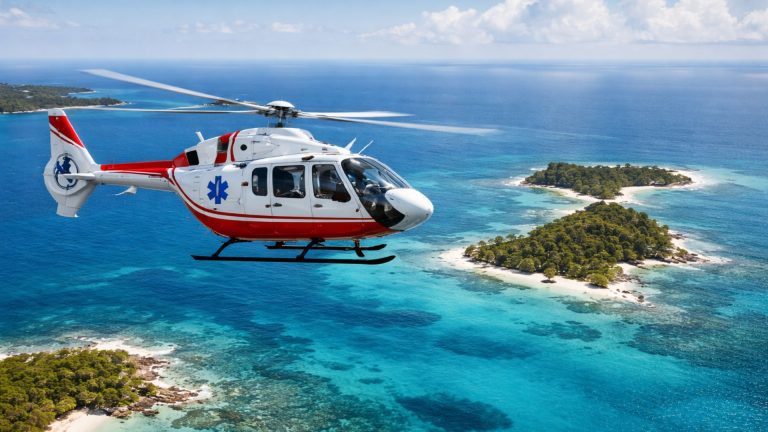
- Helicopter ambulances: used for short-range emergency rescues, often from accident scenes to nearby hospitals.
- Fixed-wing air ambulances: used for longer distances, including international medical repatriation and inter-hospital transfers.
Unlike commercial airlines, air ambulances are configured specifically for critical care transport. They carry specialized medical teams, tailor the environment to the patient’s needs, and follow clinical protocols from takeoff to touchdown.
When Do You Need an Air Ambulance?
Most people don’t think about emergency air transport—until it becomes unavoidable.
Here are the most common scenarios where an air ambulance is required:
1. Severe illness or injury abroad
You’re on vacation in the Caribbean and suffer a heart attack. The local hospital lacks a cardiac surgery unit. You need to be transferred urgently to a facility that can handle your condition.
2. Remote-location emergencies
Offshore workers, researchers, or NGO staff may fall ill in areas without immediate hospital access. Helicopter or plane evacuation is the only viable option.
3. Planned medical repatriation
A patient may be stable but unfit for commercial travel. In this case, a fixed-wing air ambulance or commercial stretcher flight with a medical escort can be arranged.
4. Disaster zone evacuations
In natural disaster situations—such as hurricanes or earthquakes—local infrastructure may be damaged. Air ambulances help extract vulnerable patients to safe, functioning hospitals.
Types of Air Ambulance Services
Different situations call for different transport options. Let’s look at the three primary types of air ambulance transport:
🚁 Helicopter Ambulances
- Range: Short (under 300 km)
- Ideal for: On-site rescue, road accidents, rural areas
- Crew: Typically a paramedic and flight nurse
- Features: Quick response, access to difficult terrain
✈️ Fixed-Wing Air Ambulances
- Range: Long (regional or international)
- Ideal for: Cross-border transfers, ICU-level patients
- Crew: Doctor, critical care nurse, respiratory therapist
- Features: Full ICU setup, oxygen, ventilators, medication pumps
Fixed-wing aircraft are the gold standard for international patient transfer. They operate on flexible schedules and can land at airports around the world—often coordinating with ground ambulances for full bed-to-bed service.
🧳 Commercial Medical Escort Flights
- Range: Global
- Ideal for: Stable patients who don’t need full ICU care
- Setup: Patient flies on a commercial airline, accompanied by a nurse or doctor
- Optional: Stretcher space (rear seats removed and replaced with a stretcher, privacy curtain, and oxygen setup)
This option is significantly more cost-effective than chartering a full medical aircraft. However, it requires more paperwork and airline approval, and isn’t suitable for unstable patients.
What Happens During a Medical Flight?
Behind every successful air ambulance mission is a complex chain of planning and coordination. Here’s a look at what typically happens:
📋 Pre-Flight Medical Evaluation
The process starts with a detailed assessment from a local doctor or remote medical advisor. This confirms the patient’s condition and whether a flight is safe and appropriate. Key questions include:
- Is the patient stable for altitude changes?
- Will oxygen or life support be required?
- What medications must be administered in-flight?
✈️ Flight Logistics & Planning
Coordinators handle:
- Aircraft availability and route planning
- Customs, passports, and health clearances
- Ground transport at both origin and destination
- Bed availability at the receiving hospital
Every detail is managed to ensure a smooth bed-to-bed transfer.
🧑⚕️ Medical Crew Onboard
Depending on the case, the crew might include:
- Emergency physicians
- ICU nurses
- Anesthetists or respiratory therapists
The air ambulance team is trained to handle everything from mid-air intubation to cardiac monitoring, ensuring continuity of care throughout the journey.

Who Pays for an Air Ambulance?
🛡 Insurance Providers
For insurance companies, arranging air ambulance services is part of delivering value to policyholders—especially those with international or adventure travel coverage. That said, the costs can be significant:
- Short-range helicopter flight: $5,000–$10,000
- International fixed-wing flight: $25,000–$100,000+
- Commercial stretcher repatriation: $8,000–$20,000
Insurance coverage varies depending on:
- Policy type and travel destination
- Whether repatriation is medically necessary
- The patient’s condition and prognosis
Insurers often work with regional partners or case management agencies to streamline decisions, reduce costs, and manage documentation.
💳 Private Pay
If a traveler is uninsured—or if their plan excludes air transport—they may need to pay out-of-pocket. In these cases, choosing the right provider becomes crucial for transparency, safety, and efficiency.
Why Regional Expertise Is a Game-Changer
Coordinating a successful air ambulance mission isn’t just about flying a plane. It’s about knowing the terrain—both literal and bureaucratic.
In regions like the Caribbean, local knowledge makes all the difference:
- Understanding island-to-island flight restrictions
- Managing multilingual communication
- Knowing which hospitals can receive which types of patients
- Coordinating customs, passports, and health protocols
Delays in paperwork or lack of hospital availability can cost lives or escalate costs dramatically. That’s why insurance companies and healthcare providers increasingly work with regional medical concierge services who can move quickly and confidently across local systems.
West Indies Assistance: Your Air Ambulance Ally in the Caribbean
In the Caribbean, West Indies Assistance (WIA) has become a trusted name in medical evacuation, medical repatriation, and air ambulance coordination. With over 20 years of experience and more than 10,000 successful missions, WIA offers a full range of services for insurers and patients alike.
Whether it’s a critical-care air ambulance from Barbados to Martinique, or a commercial stretcher flight from Guadeloupe to Paris, WIA handles:
- Medical assessment and documentation
- Bed-to-bed or wings-to-wings transfers
- 24/7 multilingual support
- Ground ambulance coordination
- Insurance liaison and reporting
Their expertise lies not just in air medical services, but in the end-to-end logistics that make them work—especially in time-sensitive, high-stress situations.