When a medical emergency happens far from home, few things matter more than time, expertise, and access to proper care. That’s where medevac—short for medical evacuation—comes in. Whether you’re an insurance professional managing high-risk coverage, a traveler exploring remote locations, or a healthcare coordinator arranging patient transfers, understanding the role and mechanics of aeromedical evacuation is essential.
In this guide, we break down the meaning of medevac, explore the different types of air medical services, and highlight what goes on behind the scenes during an international medical evacuation.
What Is a Medevac?
Medevac refers to the transportation of a patient from one location to another, usually by air, when urgent or specialized medical care is needed elsewhere. The term comes from “medical evacuation” and is used across military, civilian, and emergency response contexts.
Unlike a standard ambulance ride, a medevac involves a carefully orchestrated operation—often featuring a fixed-wing air ambulance or helicopter, onboard medical personnel, and advanced equipment. It’s not just about moving someone quickly—it’s about moving them safely, while continuing their care mid-flight.
In contrast to CASEVAC (casualty evacuation), which often refers to non-dedicated transport used in military or conflict zones without guaranteed medical support, medevac implies a structured, clinically-supervised process.
Why Medevac Services Matter
In the world of international travel, offshore work, and remote living, access to immediate, high-quality healthcare isn’t always a given. You might be on a yacht in the Caribbean, managing an oil platform off the coast of South America, or coordinating international student programs when something unexpected happens.
In these cases, a medevac service is more than a transport option—it’s a lifeline.
Key reasons medevac services are crucial:
- Time-sensitive treatment: Getting a patient to a better-equipped facility within the “golden hour” can dramatically affect survival and recovery outcomes.
- Specialized care mid-flight: Air medical teams provide continuous monitoring and treatment during the journey.
- Geographic limitations: Many regions lack advanced hospitals, ICU beds, or surgical capabilities.
- Cross-border coordination: Medevac services often handle customs, immigration, and health documents required for international patient transfers.
- Insurance claims and risk reduction: For insurers, choosing a reliable provider means controlling costs and ensuring policyholder satisfaction.
In other words, aeromedical evacuation turns a potentially chaotic emergency into a coordinated, medically-managed operation.
Types of Medevac Transport
Not all medical evacuations are alike. The choice of transport depends on the patient’s condition, location, and the destination’s distance and infrastructure.
Helicopter Medevac
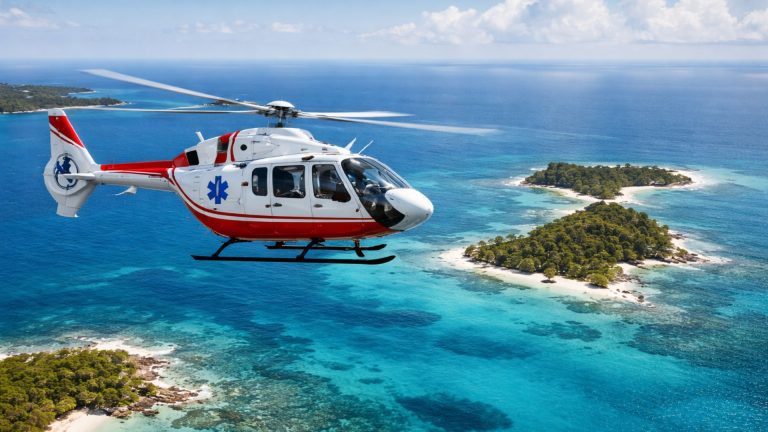
Used in cases where speed and accessibility are critical, helicopters are ideal for:
- Emergency scenes in remote or mountainous terrain
- Island-to-island transfers in archipelagos
- Road accidents where ambulances can’t reach
Medical helicopters are typically staffed with paramedics or critical care nurses, and equipped with trauma kits, defibrillators, oxygen, and stabilization tools. However, they’re best suited for short-distance transfers, typically to the nearest trauma center.
Fixed-Wing Air Ambulance
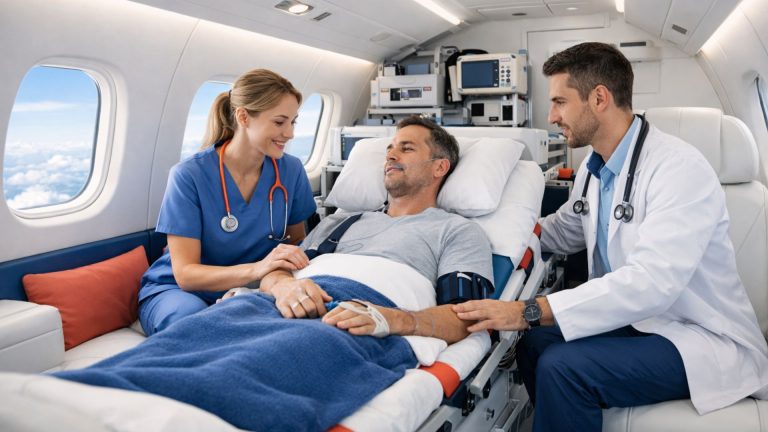
For longer distances, particularly intercontinental repatriations, a fixed-wing aircraft (such as a Learjet or Gulfstream) is the gold standard.
These aircraft are outfitted with:
- ICU-grade equipment: ventilators, cardiac monitors, infusion pumps
- Onboard oxygen supply and power systems for long-haul flights
- Medical escorts: intensive care doctors, flight nurses, or anesthetists
They allow for bed-to-bed transport from one hospital to another, ensuring care continuity throughout the journey. These flights are ideal for patients requiring monitoring, post-surgical care, or even end-of-life repatriation.
Commercial Stretcher Flights
For non-critical patients, flying commercially with a stretcher and medical escort can be a cost-effective option. The airline removes several rows of seats and installs a stretcher in the rear section of the cabin. A curtain offers privacy, and the patient is accompanied by a nurse or doctor.
Though this option requires more paperwork and pre-clearance, it offers a balance of comfort, safety, and affordability—especially for insured travelers returning to Europe from regions like the Caribbean or Latin America.
Who Needs a Medevac?
Medevac services serve a variety of people and industries. Here are the most common users:
Insurance Providers
Insurance companies rely on medevac providers to fulfill coverage promises and minimize medical costs abroad. A well-managed evacuation can prevent extended stays in high-cost clinics or emergency repatriation at the last minute.
Travelers and Expats
From sun-seekers in the Caribbean to digital nomads in Central America, travelers may find themselves far from urban centers. In case of an accident, stroke, heart attack, or tropical disease, they often need to be flown home or to the nearest capable hospital.
Healthcare Coordinators
Hospitals and clinics use medevac services to transfer patients who need specialized procedures, rehab, or advanced diagnostics unavailable locally.
Remote Workers
Offshore oil and gas workers, researchers, military staff, and humanitarian aid workers may need urgent evacuations when injuries or infections occur in isolated locations.

Behind the Scenes: How a Medevac Works
Organizing a medevac is more complex than booking a flight and calling an ambulance. It involves multiple moving parts:
1. Medical Assessment
The process begins with an evaluation of the patient’s condition by a local physician or remote telemedicine team. The decision is made whether air transfer is safe and medically necessary.
2. Insurance Authorization
The provider (often an insurance case manager) must approve the operation. This includes verifying policy coverage, negotiating pricing, and coordinating guarantees of payment.
3. Flight Logistics
Depending on the type of medevac, the provider arranges:
- Airspace and airport clearance
- Patient documentation
- Customs, visas, or health certificates
- Landing rights and ambulance availability on both ends
4. Medical Escort & Equipment
Specialized teams—ICU nurses, anesthetists, respiratory therapists—prepare to board with all required equipment for monitoring, medication, and in-flight care.
5. Receiving Hospital Coordination
The final piece is ensuring a bed is available at the receiving facility and that the medical records arrive in advance. Some providers offer full bed-to-bed transfer, ensuring the patient is never left alone or without proper care.
Medevac vs. Casevac: Know the Difference
The terms “medevac” and “casevac” are often used interchangeably but have crucial differences.
| Term | Meaning | Medical Staff | Equipment |
| Medevac | Medical Evacuation | Yes | Yes (ICU-level) |
| Casevac | Casualty Evacuation | Not necessarily | No guaranteed medical equipment |
While casevac may work in improvised field scenarios, only medevac ensures structured medical oversight throughout the transport—something essential for critically ill patients.
Why Regional Experience Matters
Operating a medevac across international borders is logistically demanding. Local knowledge—of airports, medical systems, and administrative processes—can significantly improve outcomes.
That’s where companies like West Indies Assistance (WIA) play a pivotal role.
Based in Martinique, with operations throughout the Caribbean—including Guadeloupe, Saint Martin, and Barbados—WIA specializes in medical evacuation and medical repatriation services. With over 20 years of experience and a team of trained medical coordinators, WIA provides:
- 24/7 multilingual support
- Seamless coordination between hospitals, families, and insurers
- Access to European-standard hospitals in the region
- Strong knowledge of customs and immigration procedures
- Commercial stretcher flight management and bed-to-bed care
For insurance professionals, this local expertise means fewer delays, clear cost structures, and better outcomes for policyholders. For travelers, it means peace of mind and compassionate care during frightening moments.
Learn more about WIA’s services at westindies-assistance.com.
A Real-World Example
Let’s say a 67-year-old tourist from France is vacationing in Saint Lucia when they suffer a stroke. The local clinic can stabilize them, but advanced care is unavailable. Their travel insurance provider arranges a fixed-wing air ambulance to Martinique, where WIA coordinates a direct ICU admission. After several days of treatment and stabilization, the patient is cleared for a commercial stretcher flight back to France, accompanied by a nurse.
The entire operation—from diagnosis to final hospital admission—was managed without disruption to care or billing confusion, thanks to experienced medevac coordination.
Takeaway: Being Prepared Makes All the Difference
Medical emergencies don’t wait for convenience. Whether you’re handling coverage for hundreds of travelers, managing overseas staff, or simply planning a vacation, understanding how medevac works is crucial.
When lives are on the line, experience, logistics, and communication matter. And while you can’t always prevent emergencies, you can be ready to respond quickly and smartly—with the right partners and protocols in place.